


Description
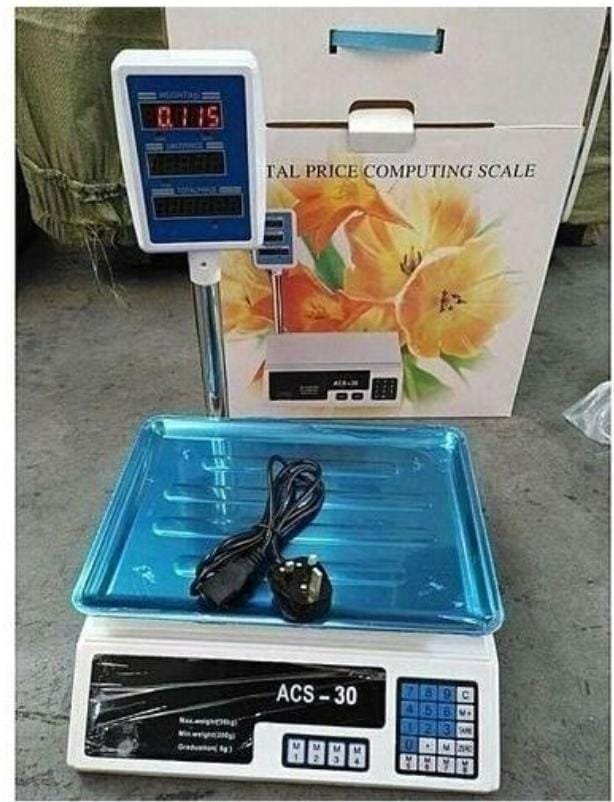
ACS 30kg Weighing Scale for shops, grocery stores and small businesses. Check capacity, accuracy and features to suit your needs. Order today.
ACS 30kg Digital Weighing Scale is designed for weighing goods, products, and materials up to its stated 30kg capacity. It is suitable for businesses and individuals who need a practical weighing solution for everyday commercial activities, including retail shops, grocery stores, market stalls, and small businesses. Before purchasing, customers should confirm the exact model specifications, display type, weighing accuracy, and available functions to ensure the scale meets their requirements.
Product Overview
The ACS 30kg Digital Weighing Scale is a weighing solution for users who regularly measure the weight of products during buying, selling, packaging, and stock management. Its stated maximum capacity of 30kg makes it a potential option for businesses handling small to medium-sized goods that fall within the scale’s rated weighing limit.
A weighing scale can help simplify routine transactions by providing a weight measurement that assists with pricing, portioning, and inventory recording. The suitability of this ACS weighing scale depends on its verified specifications and the type of goods being weighed.
Applications and Uses
Retail Shops and Small Businesses
Retailers may use a suitable 30kg weighing scale to measure products during sales and routine stock handling. It can be considered for shops that handle goods requiring weight-based measurements, provided the scale’s accuracy and intended-use specifications meet the business’s needs.
Grocery Stores and Market Stalls
Businesses selling fruits, vegetables, and other produce can benefit from having a dedicated weighing scale for measuring product quantities. A scale with a 30kg capacity may be suitable for weighing individual products or grouped items within its rated limit.
Food and Produce Handling
Food retailers, produce traders, and small-scale food businesses may use a suitable weighing scale when measuring ingredients, packaged products, and other goods. Users should ensure that the scale is appropriate for the working environment and that any surface contacting food is suitable for that purpose.
Packaging and Stock Management
Small businesses may use a weighing scale to check product quantities, prepare packages, and maintain stock records. Consistent weighing practices can support day-to-day business organization and help users monitor quantities during product handling.
General Commercial Weighing
The scale may be considered for other everyday weighing tasks involving goods that fall within its capacity. Before using it for a particular application, customers should check the manufacturer’s guidance and confirm that the equipment provides the required measurement resolution and accuracy.
30kg Weighing Capacity
The stated 30kg capacity is the main identifying specification supplied for this product. It represents the advertised maximum weighing limit, which should be confirmed against the rating label or technical documentation for the exact model.
Maximum capacity is different from readability or graduation. Readability refers to the smallest displayed weight increment, while accuracy describes how closely a measurement corresponds to the actual weight under specified conditions. These details are important for businesses that require consistent and dependable measurements.
Users should avoid placing loads above the rated capacity. Goods should be positioned securely on the weighing platform, with their weight distributed appropriately to prevent instability or damage.
Display and Operating Functions
The exact display type and operating functions of the ACS 30kg Weighing Scale should be verified before purchase. Customers should confirm whether the particular model includes a digital display and identify the controls and functions provided by the manufacturer.
Features such as tare, zero adjustment, unit conversion, rechargeable battery operation, and automatic power-off should not be assumed unless they are confirmed for the specific model. Different weighing scales can have different functions even when they share a similar capacity.
Before using the scale, operators should read the supplied instructions and become familiar with the controls. Following the manufacturer’s recommended operating procedure can help reduce handling errors and support consistent measurements.
Installation and Placement
Correct placement is important for reliable weighing performance. Position the scale on a stable, level surface away from excessive vibration, movement, and other conditions that could interfere with measurements.
Ensure that the weighing platform is clean and unobstructed before placing products on it. Avoid allowing goods to rest against surrounding objects because this may affect the reading. Heavy or irregularly shaped items should be positioned carefully to maintain stability.
Before ordering, confirm the platform dimensions and overall size to ensure that the scale fits the intended workspace. The available space should allow operators to place and remove goods conveniently.
Maintenance and Care
Routine care can help maintain the scale’s condition and usability. Keep the weighing platform clean and remove dust, dirt, and product residue that could interfere with normal operation.
Avoid overloading the scale, dropping heavy objects onto the platform, or exposing the equipment to moisture and environmental conditions outside the manufacturer’s recommendations. If the model uses electronic components or a battery, follow the specified handling and power instructions.
Check the scale periodically for visible damage, unstable placement, or inconsistent readings. If measurements appear unreliable, consult the manufacturer’s guidance or a qualified weighing-equipment technician. Calibration and servicing should follow the recommendations applicable to the particular model.
Accuracy and Commercial Use
Businesses that use weighing measurements to determine selling prices should pay particular attention to accuracy and any applicable legal requirements. Confirm the scale’s graduation interval, permitted measurement tolerance, calibration status, and suitability for commercial transactions before relying on it for regulated weighing activities.
The 30kg capacity alone does not establish the scale’s accuracy class, certification, or approval for trade. Customers should request the relevant documentation where these characteristics are necessary.
Important Buying Considerations
Before purchasing the ACS 30kg Digital Weighing Scale, verify the exact model and the specifications provided by the seller. Important details include the maximum capacity, readability, accuracy, platform dimensions, display type, power source, and supported functions.
Customers should also confirm the warranty, availability of replacement parts, servicing options, and any accessories included with the product. Do not assume that batteries, a power adapter, or other accessories are included unless the seller confirms this.
Choosing a scale that matches the intended application helps avoid capacity limitations and unnecessary measurement problems. Businesses should consider the size and weight of the products they handle, the frequency of weighing, and the accuracy required for their operations.
Conclusion
The ACS 30kg Digital Weighing Scale is intended for weighing products and goods within its stated capacity. It may be suitable for retail shops, grocery businesses, market stalls, produce handling, packaging, and other everyday commercial applications, subject to the verified specifications of the particular model.
By checking the weighing capacity, accuracy, display, power requirements, and available functions before purchase, customers can make an informed decision about whether this scale meets their needs. Proper placement, careful loading, and routine maintenance can help support reliable operation throughout its service life.
Reviews
There are no reviews yet.